Compliance and Capital Progress Signals for Menopause
Jun 09, 2026
The start of June delivered three separate pieces of news about women’s health, specifically about the women’s health that happens after the fertility industrial complex has finished with you, the part that medicine has been quietly ignoring for decades. They all landed within days of each other – creating a signal worth talking about.
The first two involve organizational menopause care regulation in Illinois and Washington State, indicating that compliance is becoming the floor for businesses – moving menopause from a nice-to-have to a critical consideration. The third is news from philanthropist Melinda French Gates about material investment dollars allocated to organizations funding menopause progress.
Illinois Compliance Update
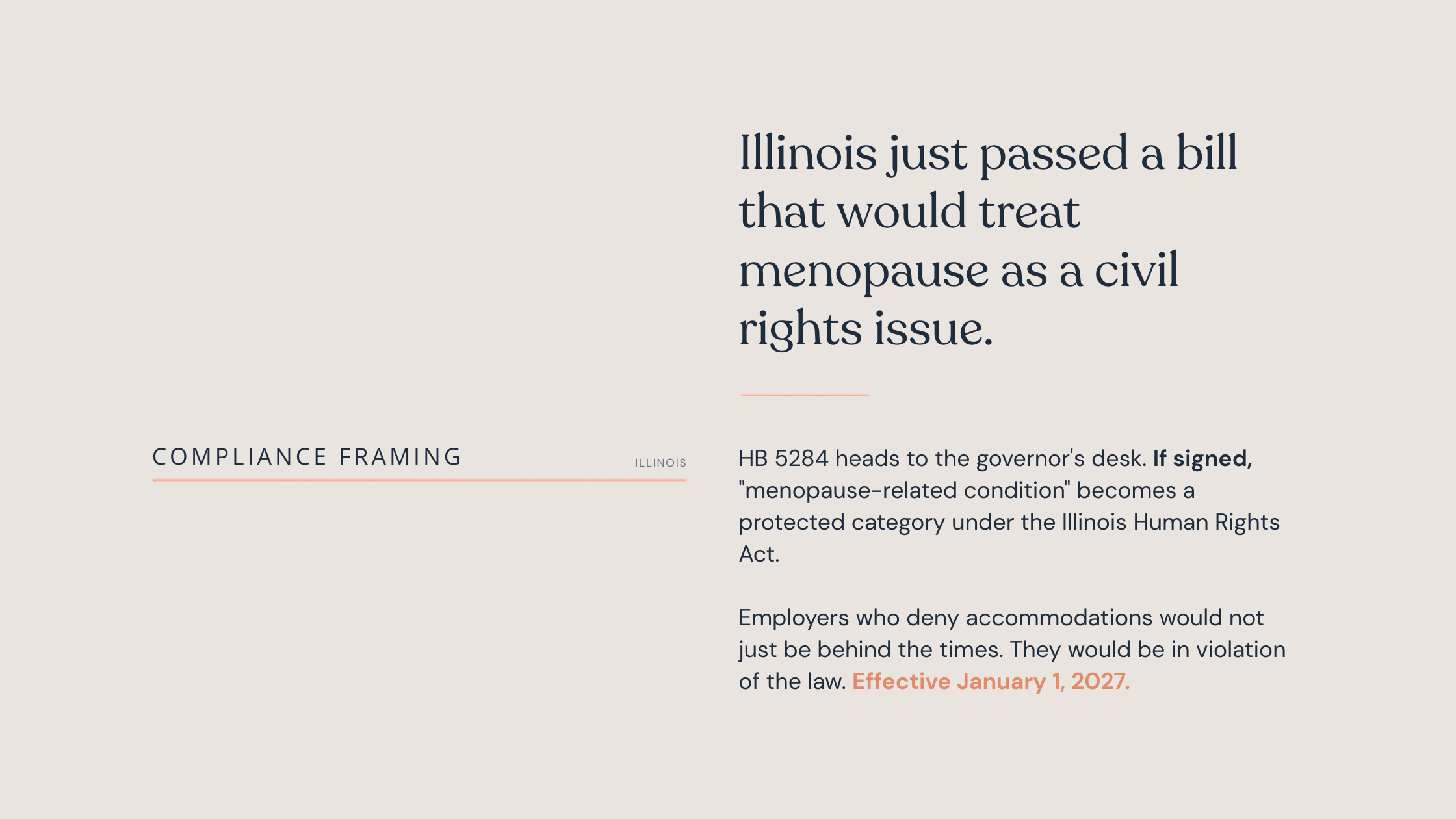
The Illinois legislature passed HB 5284, the Illinois Menopause Equity and Care Act, and it is now headed to the governor’s desk. If signed, it would add “menopause-related condition” as a protected category under the Illinois Human Rights Act. Employers with four or more employees would be required to provide reasonable accommodations, including:
- Flexible scheduling
- Temperature-adjusted workspaces
- Remote work options
For the record, let's note that we have apparently needed to make “access to a fan” a civil rights issue. We are absolutely thriving as a society.
But the framing matters enormously. This is not a wellness initiative. It is not a benefits upgrade. It is a civil rights designation, which means it carries legal weight. An employer who denies reasonable accommodations would not just be behind the times. Under this bill, they would be in violation of the Illinois Human Rights Act. That is a meaningfully different conversation, and if it takes forty years and a state legislature to have it, fine. We are having it.
The employment provisions would take effect January 1, 2027, if the governor signs. And Illinois is not operating in isolation here. Similar proposals are moving in other states. The compliance trajectory is being drawn.
Washington Compliance Update
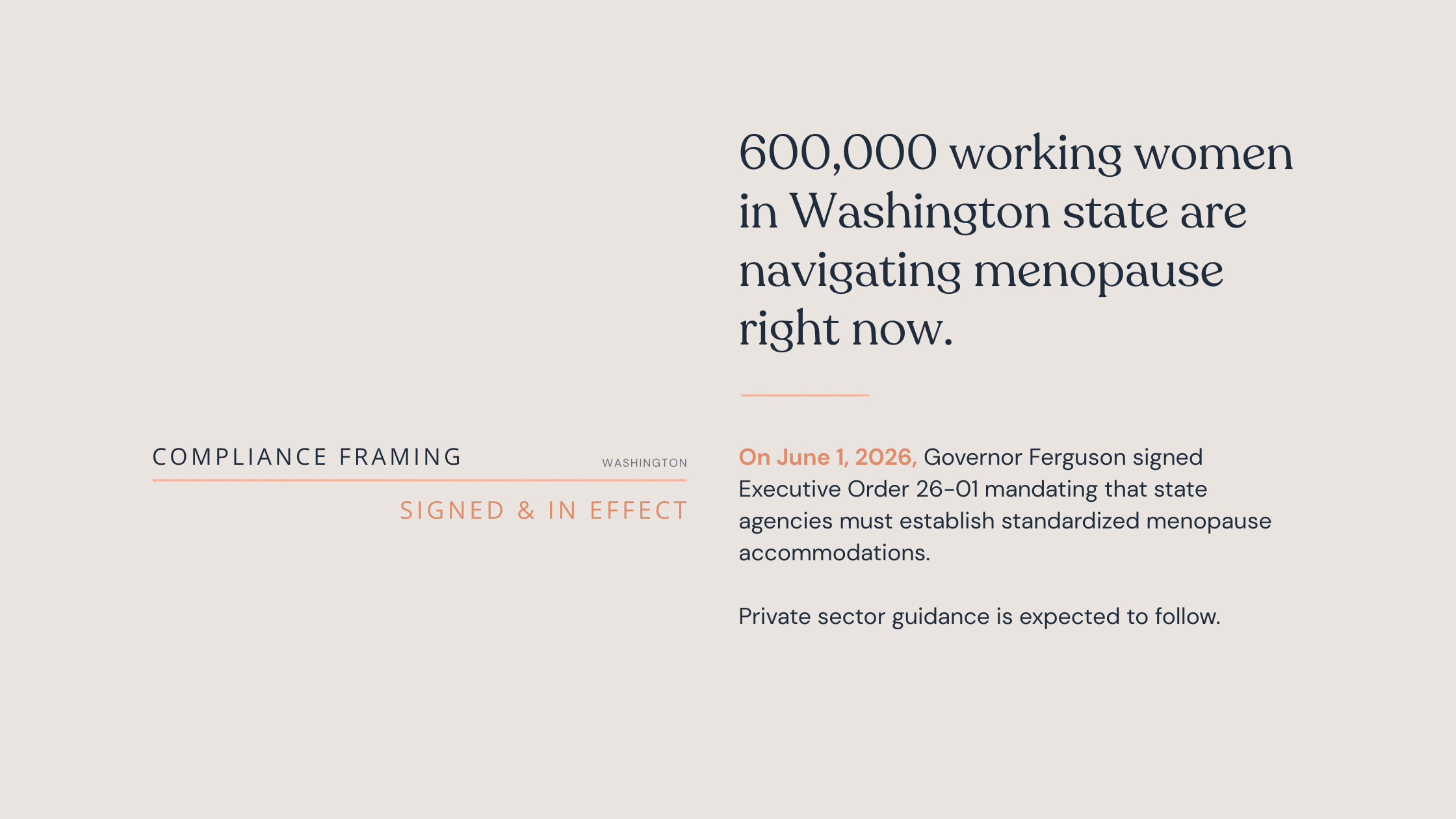
Governor Bob Ferguson signed Executive Order 26-01, making Washington one of the first states to issue a formal executive directive on menopause workplace accommodations. This one is already in effect for state agency employees, with voluntary guidance being developed for the private sector.
The numbers the governor cited during the press conference are worth sitting with. Roughly 38% of working women in Washington are between 40 and 59. That is approximately 600,000 people navigating some phase of the menopause transition while trying to hold down their jobs. The Mayo Clinic estimates $1.8 billion in annual productivity losses nationally due to menopausal symptoms. The Society for Women’s Health Research found that two in five women have considered leaving, or have already left, their jobs because of symptoms. One in four have passed on leadership opportunities.
"We are losing people in the workforce with tremendous knowledge, tremendous experience… because we are not doing enough to prepare for a natural stage of life that impacts half our population.” (Governor Ferguson)
I am going to let the fact that a formal government press conference was required to establish that women should have access to cold water and a reasonable dress code sit there, unadorned, like a participation trophy for the bare minimum.
The accommodation list Washington outlined looks almost identical to what Illinois is proposing: telework flexibility, temperature control, dress code adjustments, manager training. This is becoming the emerging standard. It is not controversial. It is just overdue.
Capital Update
Melinda French Gates has allocated $215 million in new funding for women’s health through Pivotal, the philanthropic organization she founded after leaving the Gates Foundation in 2024. This latest pledge brings her total commitment to women’s health to over $600 million in the past two years.
Six. Hundred. Million. Dollars.
Her $10 million donation to the Menopause Society is specifically aimed at educating healthcare practitioners and expanding access to care in underserved areas.
She told the Associated Press that she hopes the investment signals to other funders that women’s health is a viable category to back, not just an afterthought.
“I want women’s health issues to not be invisible. I don’t want the default to be that women are expected to deal with pain and suffering.” (Melinda French Gates)
She is also being transparent about the political climate she is navigating. She told Fortune that women’s health has become “politicized” and that donors are afraid of angering the current administration, so part of her goal is to demonstrate that women’s health funding remains legitimate, urgent, and worth the risk.
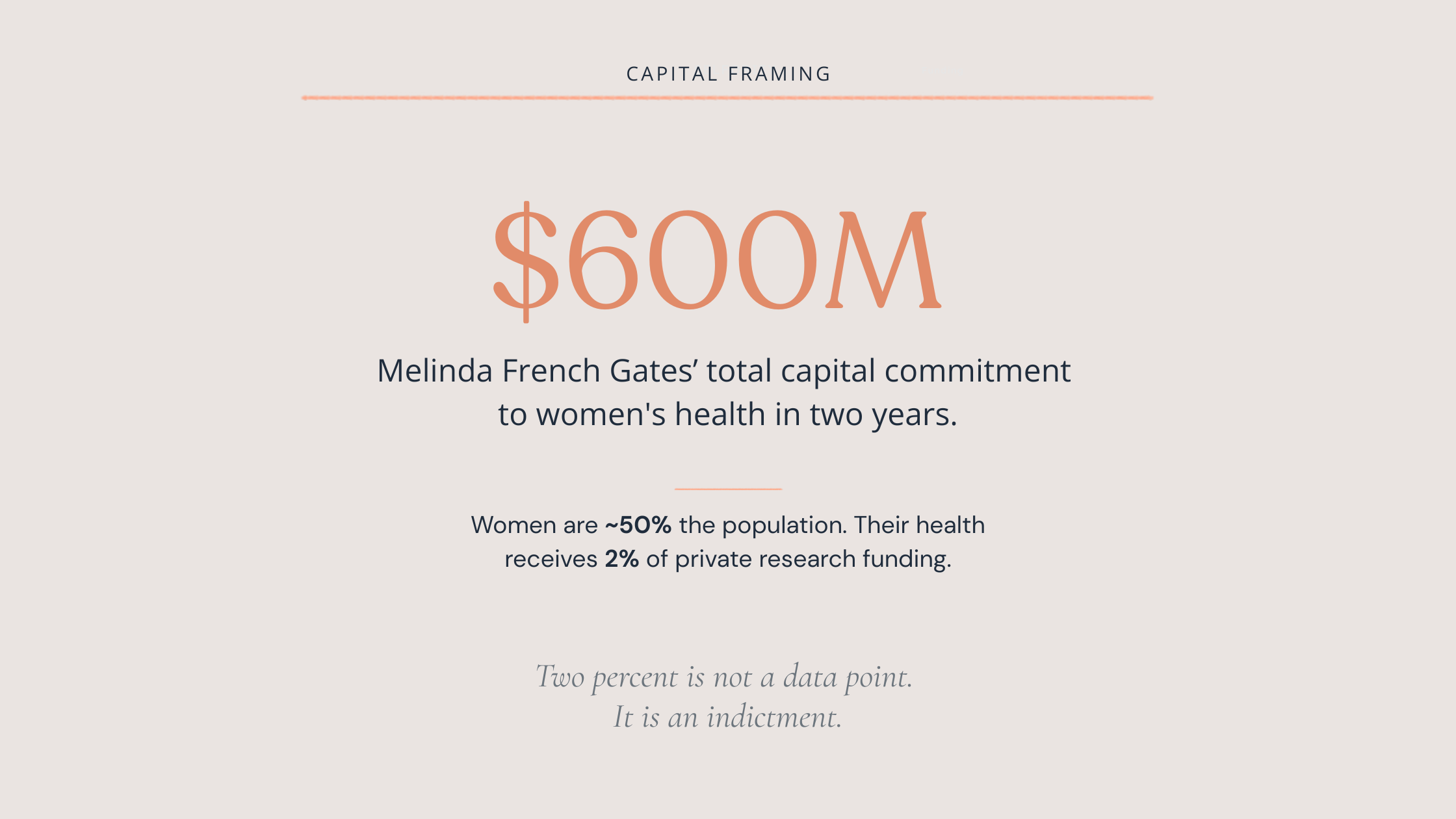
The World Economic Forum has reported that even though women make up half the global population, health issues that specifically affect women receive only 2% of private healthcare funds.
Two percent.
I have been a physician for over a decade. I have read that statistic in grant applications, in advocacy papers, in op-eds. I have said it out loud in rooms where people nodded and moved on. Two percent is not a data point anymore. It is an indictment. It is the number that explains every delayed diagnosis, every dismissed symptom, every woman who spent years being told she was anxious before someone finally ran the right test. It is the number that explains why we needed a billionaire to write a check to fund research into a transition that half the population will experience.
A fan. A flexible schedule. Sixty cents on the dollar of research funding. This is the bar we have been clearing, and we have not always cleared it.
What To Do With This News
Let's not pretend this is a triumphant moment. Women’s health legislation is moving forward in some states at the same time it is being dismantled in others. A billionaire is writing checks because the funding infrastructure is broken. An executive order gets signed and it reads like a revelation when it is, in fact, just describing a fan and a flexible schedule.
But something is shifting. The window of what is sayable, fundable, and legally protectable is opening. The policy environment is moving faster than most organizations are prepared for. The research funding is beginning to catch up. The cultural conversation, however fitfully, is becoming one.
Pay attention to this. Not because it is trending. Because it has been quietly true for decades, and the fact that it is finally loud enough to notice means something worth noticing.
Join our mailing list to receive the latest news and updates from Selfority.
We hate SPAM. We will never sell your information, for any reason.
Author