What the Word "Menopause" Was Always Telling Us
Apr 29, 2026
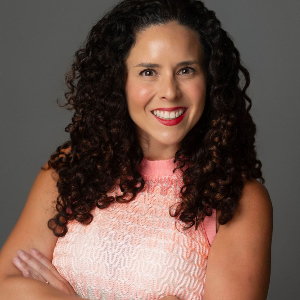
This article was originally posted on Dr. Sarah Berg's beautiful Substack, Still Becoming. It offers a look into some of what motivates her to create Selfority as a doctor-led, evidence-driven, product-agnostic information resource for women and those who support them.
A LinkedIn post by The Female Quotient that stopped me mid-scroll. They were writing about the Japanese term kōnenki, the word used for the phase of life we call menopause, and what it actually means: a season of change, a shift of years. I sat with that for a long time. Language is one of my oldest obsessions, and here was a single word from another culture doing something our word has never done.
It was not describing an ending. It was describing a becoming.
That contrast sent me somewhere I did not expect to go, back behind the familiar, into the uncomfortable backstory we have all been fed about what it means to be a woman in midlife. This essay is what I found there. I think it is one of the most important things I have written, not because I have answers, but because I think we have been living inside a story we never stopped to question.
Each woman is unique, and yet sharing an common experience.
There was a moment in my OB-GYN exam room that repeated itself with remarkable consistency. A competent, high-functioning woman sat across from me describing months of disrupted sleep, creeping anxiety, weight changes she does not recognize, and a fogginess that makes her doubt her own sharpness. She has been living with these symptoms long enough to have developed theories about them. Stress. Thyroid. A demanding season at work. A concern for early-onset dementia. When I say the word menopause, something in the room shifts.
The symptoms themselves rarely surprised her. The label did.
I have watched women who lead companies, manage households, and oversee teams recoil from a single word. The conversation moved abruptly from problem-solving to protest. They insist they are too young. They suggest burnout, travel, the particular difficulty of the past few years. The resistance is almost never about the night sweats. It is about what the word implies, and what they have understood for a very long time, the word would mean about them. Menopause does not arrive as neutral biology. It arrives carrying everything the culture has already said about aging women.
We live in a language saturated with those messages. A woman can be described as past her prime before she has finished raising her children. She is told she still looks good for her age, a compliment(?) an expiration date built in. The phrase over the hill is delivered with a laugh but carries a verdict. These expressions feel harmless because they are so familiar, yet together they sketch a narrative in which a woman’s visibility peaks during her reproductive years and then abruptly recedes. By the time menopause arrives biologically, most women have been absorbing that narrative for decades. When the word appears, it does not introduce a new idea. It confirms one that was already there.
The word Menopause has a history worth sitting with. Derived from the Greek men, meaning month, and pausis, meaning cessation, it refers literally to the stopping of the monthly cycle.
Linguistically, midlife women are defined by what ends. That framing may seem clinically neutral, but language is rarely neutral. Words establish context before experience does. They signal what a transition means and, by extension, what the person undergoing it is worth. The word gained traction in nineteenth-century medical literature, when women’s bodies were studied primarily through the lens of reproductive function, and its conclusion was described in terms of deficiency and decline. That worldview has not persisted openly, but it has persisted in the language.
Other languages handle this differently, and the differences are instructive.
- In Japanese, kōnenki refers to a season of change, a shift of years rather than a stopping point.
- German’s wechseljahre translates to change years, with the emphasis on duration and process.
- In Māori culture, the term ruahinetanga has been associated with a woman’s emergence into elderhood, a stage understood as carrying responsibility and authority within the community.
These are not simply poetic alternatives. They reflect what each culture believes happens to women once reproduction ends. Where older women are expected to remain visible as leaders and knowledge holders, the vocabulary acknowledges continuity. Where women’s social value has been more tightly tied to youth and fertility, the language leans toward cessation. The word becomes a small cultural mirror.
In my clinic, two women with nearly identical hormonal profiles can experience the same transition very differently depending on the narrative they have been carrying into midlife. When menopause has been framed as the beginning of decline, disrupted sleep or difficulty with word retrieval feels like confirmation that something fundamental is slipping away. When it is framed as a predictable transition, those same symptoms are more likely to be understood as part of a process that can be managed and supported. The biology does not change. The meaning attached to it does, and that meaning arrives long before any symptom does.
What happens when words become infrastructure.
What strikes me most is not the initial resistance to the word. It is what happens after women begin to accept the diagnosis and start describing their experience. When they talk about how their symptoms are affecting their lives, they orient around everyone else first. “My husband has noticed I am short-tempered.” “My kids.” “My team.”
What the transition is costing them personally often comes last, folded into a kind of apology for being inconvenient. They describe their own fatigue or irritability the way someone describes a failure of character. I have sat across from women who are brilliant, load bearing, indispensable in every direction, describing themselves as if they owe the room an explanation for still being in it.
I know this pattern because I have done it. More recently than I would like to admit.
This is not a personality trait. It is what happens when you have spent a lifetime being seen through a single lens, and that lens has a name, and the name is about endings.
That is what the language has always told us: that womanhood, in its recognized and legible form, is organized around the reproductive cycle. We have words for every stage of it. Menarche. Fertility. Pregnancy. Postpartum. And then menopause, which does not describe what begins, or what shifts, or what a woman becomes. It describes what stops. The cycle ends, and in ending, takes the definition with it, as if the whole of a woman’s biological identity had only ever been on loan from her uterus.
I wish I could say it was one patient who taught me this, but it was patient after patient, across years of practice, that I kept hearing the same thing.
I would see a woman after a hysterectomy, sometimes years after, and when the subject came up, she would tear up. Even though I had told her, as her physician, that she would still be entirely herself, she did not feel that way. She felt she had lost what made her a woman when she lost her uterus. Her womb. The place where life, if it was ever going to come from her, would have grown.
One particular woman stays with me. She had heavy cycles that landed her in the hospital every few months with severe blood loss. We had tried everything, every medical intervention available, and then even a uterine ablation, a procedure that removes the inner lining of the uterus to reduce bleeding. It failed. A hysterectomy was not a preference at that point. It was the answer. And still she kept rescheduling. She missed preoperative appointments. She found reasons not to come. When she finally told me why, she said it reluctantly, the way women say the things they are most ashamed of: she was afraid that without her uterus, she would no longer be a woman. She had been told otherwise, by me and by others.
She knew the clinical facts. It did not matter, because the culture had gotten there first, and what the culture had told her, in a thousand small ways over a lifetime, was that her womanhood lived in her reproductive capacity. When that was gone, she did not know what was left.
She is not an outlier. She is the pattern.
Meanwhile, the man down the hall is being called distinguished. Silver-templed. A senior statesman of whatever room he has walked into. His gray hair is gravitas. His accumulated years are authority. There is no clinical term for what is happening to his body in midlife, no word that arrives in a doctor’s office and rearranges the air. He simply gets older, and older, in our language, is something men are allowed to do without being renamed by what has stopped.
Women get a word that is about ending. A word that reduces an entire stage of life to the cessation of a cycle, as if that cycle were the sum of everything we are.
That asymmetry is not accidental, and it is not benign. It lives in the language before it lives anywhere else, which is exactly why it is so hard to see and so difficult to argue against. You cannot point to it directly. You can only feel it, the way women have always felt the things that were never given better words.
A culture that frames menopause as diminishment is slower to accommodate it in workplaces, less inclined to fund research into it, and content to let women navigate it with inadequate language and the low-grade suspicion that they are somehow failing a transition they were never prepared to understand.
This is how language becomes infrastructure.
We gave women a word that means stopping and then wondered why so many of them arrive at this stage of life already grieving. The word was never neutral. It was never just clinical. It was a verdict delivered in advance, and most women have already accepted it before anyone has said a thing.
The work is not to rename menopause. The work is to ask what we believed about women when we named it that way, and whether we still do.
Join our mailing list to receive the latest news and updates from Selfority.
We hate SPAM. We will never sell your information, for any reason.
Author