
Old Enough
Mar 14, 2026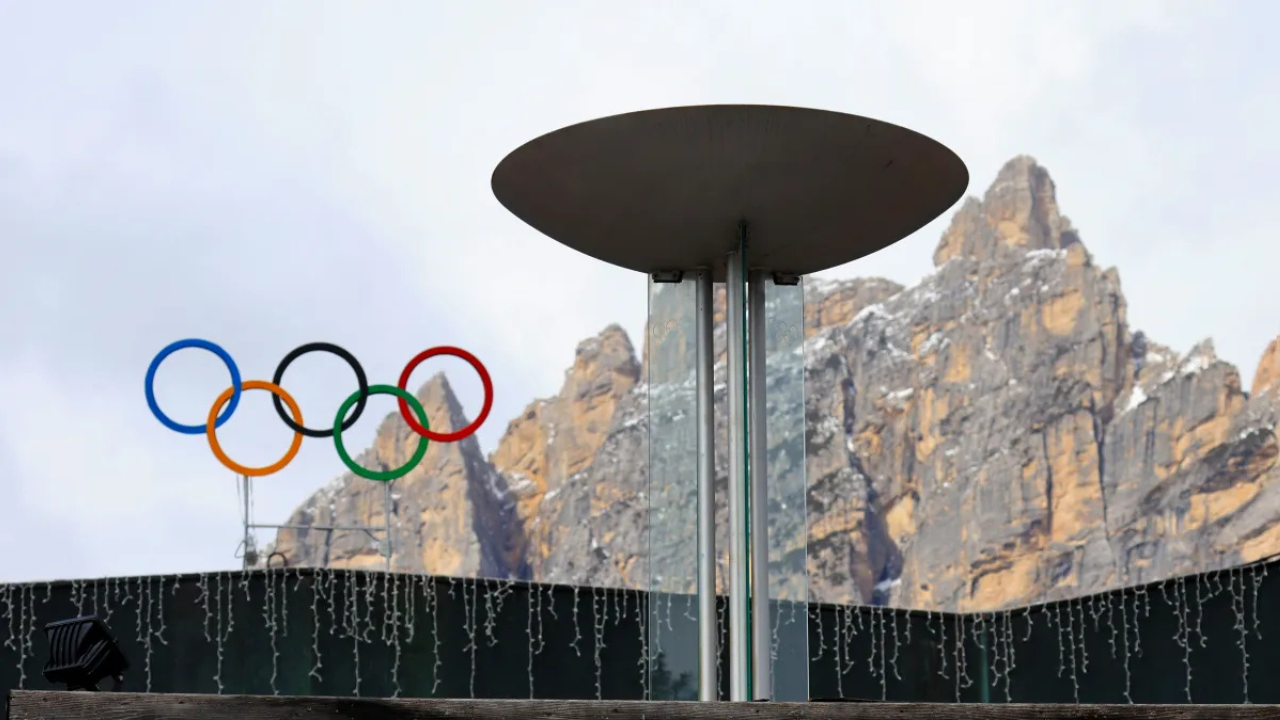
The closing ceremony is about to begin, and I am sitting at my computer pretending to work but, let’s be honest, that’s not what I’m doing. The Olympic music is already swelling in my head. There is something about the closing ceremony that feels like the most Olympics of Olympics. The recap montages. The slow pans across faces that have not slept enough. The flag handoff that makes time feel both fast and suspended. It is theatrical and sentimental and deeply unnecessary, and I love it every time.
There is always that commercial during the Games, the one that shows people who usually argue about everything suddenly united in silence. Strangers in sports bars staring at the same screen. Runners on treadmills adjusting their pace so they do not miss a finish. Commuters on a subway leaning toward the glow of someone else’s phone. For two weeks, we agree that watching a human body test its limits is worth pausing for. The Olympics dissolve our usual divisions, if only briefly.
My attachment to this spectacle goes back to 1992. I would rush home from summer camp so I could watch the days’ worth of Olympic coverage that I had made my mom record on VHS. I would sit cross legged in my sister’s room, assuming she allowed me in, because she had the easiest VCR to operate. I can still feel the click of the rewind button and the mechanical whir as tape spun backward so I could watch a moment again. I watched gymnasts suspend gravity. I watched track athletes explode out of blocks. I watched swimmers carve through water with impossible efficiency.
In 1992, I could not wait to be old enough.
Old enough to be strong enough. Old enough to be fast enough. Old enough to matter on a stage that large. Childhood felt like the waiting room. Adulthood felt like the gateway.
I did not know that one day “old” would quietly change meanings.
Somewhere along the way, old stopped sounding like arrival and started sounding like expiration. For women especially, old became something to soften, to apologize for, to hide behind better lighting and careful language.
The Olympic spirit stayed embedded in me anyway. In 1996, I fainted on the MARTA in Atlanta on the way to see a track preliminary because the air conditioning was broken and the humidity wrapped around us like wet wool. I climbed a stalled escalator because there was no other way up. And then I saw Jackie Joyner-Kersee move across the track with such command that the inconvenience dissolved. Years later, in medical school, I would rush home to watch Michael Phelps chase history, shouting at the television as if volume alone might lower his split times. Through college, residency, and early motherhood, the Games remained a reliable emotional reset. No matter how fractured the world felt, there was something steady about watching people test the edges of their capacity.
And now here I am, preparing to watch the closing ceremony of Milan Cortina 2026, realizing that this Winter Games has quietly rearranged something in me.
Because this year, I have not just been watching athletic excellence. I have been watching women my age, and older, stand at the center of it.
At fifty-two, Claudia Riegler is racing on snow that does not care how many birthdays she has had. She stands in a start gate built for explosiveness and nerve and muscle memory, and she does not look like a farewell tour. She looks like a competitor.
At forty-six, Sarah Schleper is competing in her seventh Olympic Games, this time alongside her eighteen-year-old son. A mother and son navigating the same Olympic village, adjusting goggles under the same flag, occupying parallel chapters of the same athletic story. Legacy is not something she is passing down. It is something she is living in real time.
Elana Meyers Taylor continues to redefine what elite performance looks like when motherhood is not hidden but named. She thanks her caregivers. She acknowledges the infrastructure that makes her career possible. She makes statements like, “Being a mom is my superpower.” She widens the definition of victory to include the people who allow her to stand at the start line.
And hovering over all of it is Lindsey Vonn. Her return alone reshaped the conversation. Her crash in Milan was brutal and unsanitized. There was no tidy redemption arc. But the choice to return, to risk, to compete visibly rather than preserve legacy in retirement, challenges the expectation that women should step aside early to protect what they have built. Even in falling, she disrupted the script. She said something that completely changed the game, “Age is just a number. If you’re strong and healthy and motivated, you can compete.”
As an obstetrician gynecologist who spends much of her professional life correcting misconceptions about perimenopause and menopause, I cannot watch these women without seeing the broader implication. We have allowed hormonal transition to become shorthand for decline. We speak casually about women being past their prime as if prime were a narrow summit rather than an evolving landscape. Elite sport exposes the laziness of that thinking. Strength adapts. Technique refines. Experience compounds. Motherhood does not erase competitiveness. Aging does not disqualify ambition.
And here is the part that makes me smile alone at my computer as the closing ceremony countdown begins.
I have not aged out.
Somehow, I am still technically eligible.
My training will likely continue to involve early mornings, long miles, and a deep respect for ibuprofen. It will involve saying yes to mountains, not medal ceremonies; it involves lifting heavy things so my bones remain sturdy and running long distances so my mind does too. I train so I do not break a hip one day and so that when someone asks if I want to chase a trail that climbs straight into the clouds, my answer can still be yes. I train to remain capable.
I do not train to stand on a global podium.
But for the first time in a long time, I no longer feel disqualified from the idea of it.
When I was a girl in 1992, rewinding VHS tapes in my sister’s bedroom, I could not wait to be old enough. Old enough to be strong. Old enough to matter. Old enough to belong on a stage that large. Somewhere along the way, old quietly stopped sounding like arrival and started sounding like warning.
Milan has shifted that back.
Watching Claudia Riegler at fifty-two in a start gate, watching Sarah Schleper share an Olympic chapter with her son, watching Elana Meyers Taylor name motherhood as part of her strength, watching Lindsey Vonn choose risk rather than retreat, I feel the timeline expand in real time.
In a few minutes, the closing ceremony will begin. The lights will dim. The athletes will walk in without their game faces, laughing and trading pins. The music will rise in that unmistakable way, the one that makes you sit up a little straighter even if you are alone at your computer. There will be montages of crashes and finishes and tears. Someone will say, simply, “The Olympic Games,” and it will sound both final and infinite.
And as that music swells, I will know this.
I am not aging out.
I am old enough.
Stay connected with news and updates!
Join our mailing list to receive the latest news and updates from our team.
Don't worry, your information will not be shared.
We hate SPAM. We will never sell your information, for any reason.